
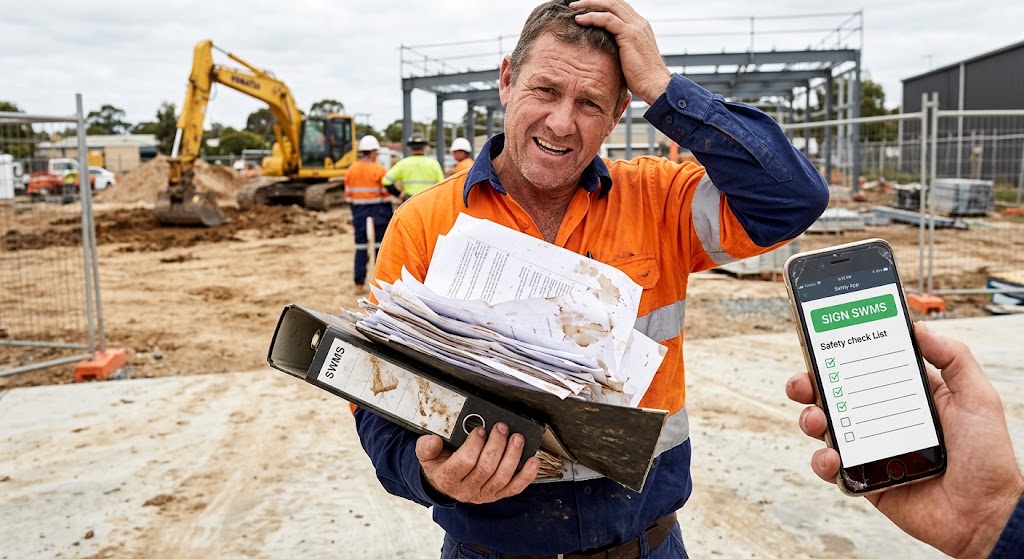
Stop Copy-Pasting SWMS, Ya Galahs—That’s Not a Safety Management System
If your SWMS folder looks like a graveyard of dusty old templates, it might be time for an intervention. Generic Safe Work Method Statements had their moment, but on a real Aussie job site, a copy-paste special is about as useful as a level with no bubble.
Everyone’s seen it: a construction SWMS for excavation that still talks about scaffolding from a previous job, or an electrical SWMS mentioning gear you don’t even own. Or a plumbing SWMS with height controls when you’re flat on a slab. It reads like a bad remix, completely detached from the actual job, plant, site, or controls.
Why Copy-Paste SWMS Are a Dog’s Breakfast
When your SWMS doesn’t match what’s actually happening on site, you’re asking for drama. You end up with:
- Missed Hazards: Real site risks get ignored because they weren’t in the template.
- Phantom Controls: Rules listed that nobody on site is actually using.
- Irrelevant Sign-Offs: Workers signing off on procedures that don’t match today’s task.
- Desktop Compliance: Paperwork that looks fine in the office, but is useless in the dirt.
That’s not compliance—that’s safety theatre. And everyone on site can smell it a mile away.
Australian SWMS Should Talk Like Your Job, Not a Textbook
A solid Australian SWMS keeps it simple: real tasks, real risks, real controls. It needs to reflect:
- The Actual Job: What you’re doing today—not three projects ago.
- The Actual Site: Tight access, public traffic, overhead lines, mud, and site quirks.
- The Actual Plant & Gear: The specific machinery, tools, and kit you’re running.
- The Actual Crew: Who’s doing what, and how they’re staying safe.
Whether it’s a construction SWMS for a commercial build, an electrical SWMS for switchboard work, or a plumbing SWMS for a trench run, the document should read like your site meeting—not a legal drama.
Make SWMS a Tool, Not a Chore
You don’t need a novel; you need clear, job-specific SWMS that your crew can run through over smoko and actually put into practice:
- Select the Task: Pick the specific scope (construction, electrical, plumbing, etc.).
- Lock in Site Details: Call out unique site conditions, access issues, and plant.
- Set Practical Controls: Add straightforward safety steps your team will actually follow.
- Engage the Crew: Walk through it, field questions, and get digital sign-offs.
When something goes sideways, you won’t be waving around a generic template hoping it covers you. You’ll have a living document that reflects how you actually work.
Retire the copy-paste specials. Build practical, job-specific SWMS instead—your crew will roll their eyes less, and your paperwork will finally match the way you build.